

“Once again Saltmarch has knocked it out of the park with interesting speakers, engaging content and challenging ideas. No jetlag fog at all, which counts for how interesting the whole thing was.”
Cybersecurity Lead, PwC

“Very much looking forward to next year. I will be keeping my eye out for the date so I can make sure I lock it in my calendar.”
Software Engineering Specialist, Intuit
“Best conference I have ever been to with lots of insights and information on next generation technologies and those that are the need of the hour.”
Software Architect, GroupOn
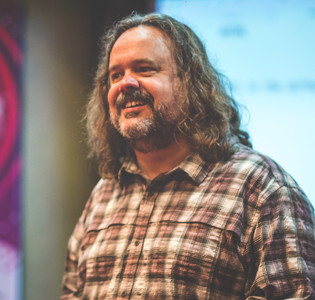
“Happy to meet everyone who came from near and far. Glad to know you've discovered some great lessons here, and glad you joined us for all the discoveries great and small.”
Web Architect & Principal Engineer, Scott Davis
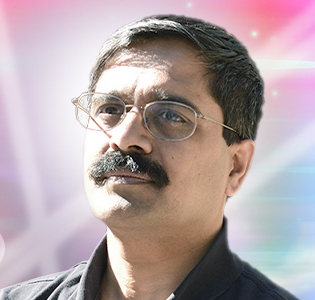
“Wonderful set of conferences, well organized, fantastic speakers, and an amazingly interactive set of audience. Thanks for having me at the events!”
Founder of Agile Developer Inc., Dr. Venkat Subramaniam

“What a buzz! The events have been instrumental in bringing the whole software community together. There has been something for everyone from developers to architects to business to vendors. Thanks everyone!”
Voltaire Yap, Global Events Manager, Oracle Corp.
As generative AI systems evolve from single LLM calls to complex, goal-driven workflows, multi-agent architectures are becoming important for building robust, scalable, and explainable AI applications.
This session presents a practical framework for designing and implementing multi-agent generative AI systems through four orchestration patterns that define how agents coordinate.
The Orchestrator–Worker pattern uses a central agent to break down a task and delegate subtasks to specialized worker agents, then aggregate and validate the results. The Hierarchical Agent pattern organizes agents into layers such as manager, specialist, and executor, which supports abstraction, delegation, and structured error handling. The Blackboard pattern allows agents to contribute to and react from a shared workspace, enabling loosely coupled, event-driven collaboration. The Market-Based pattern treats agents as autonomous participants that negotiate, bid, or compete for tasks and resources, which is useful in dynamic, resource-constrained environments.
For each pattern, the session explores practical use cases such as customer support triage, research synthesis, and code generation pipelines, and examines trade-offs in latency, complexity, and observability.
What You Will Learn
• The four orchestration patterns used to structure multi-agent AI systems
• How different coordination models support tasks such as customer support triage, research synthesis, and code generation pipelines
• Key trade-offs between patterns, including latency, system complexity, and observability
Who Should Attend
• Software Developers
• Software Architects
• AI and Machine Learning Engineers
• Technical Leads
• Engineering Managers