
“Once again Saltmarch has knocked it out of the park with interesting speakers, engaging content and challenging ideas. No jetlag fog at all, which counts for how interesting the whole thing was.”
Cybersecurity Lead, PwC

“Very much looking forward to next year. I will be keeping my eye out for the date so I can make sure I lock it in my calendar.”
Software Engineering Specialist, Intuit
“Best conference I have ever been to with lots of insights and information on next generation technologies and those that are the need of the hour.”
Software Architect, GroupOn
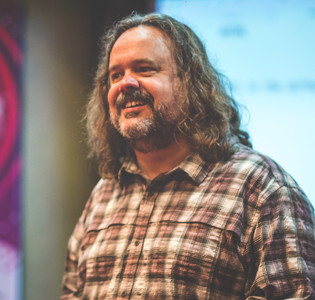
“Happy to meet everyone who came from near and far. Glad to know you've discovered some great lessons here, and glad you joined us for all the discoveries great and small.”
Web Architect & Principal Engineer, Scott Davis
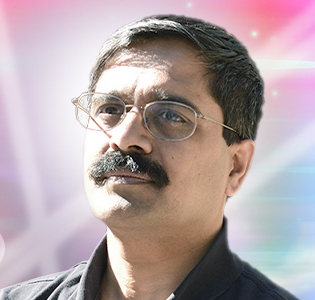
“Wonderful set of conferences, well organized, fantastic speakers, and an amazingly interactive set of audience. Thanks for having me at the events!”
Founder of Agile Developer Inc., Dr. Venkat Subramaniam
“What a buzz! The events have been instrumental in bringing the whole software community together. There has been something for everyone from developers to architects to business to vendors. Thanks everyone!”
Voltaire Yap, Global Events Manager, Oracle Corp.
What happens when a well-defined user story becomes working, tested, and documented code with a pull request open in under an hour? This session explores that question through real-world experience at Atlassian, working across large-scale codebases, monorepos, and distributed teams. It examines how the traditional software development lifecycle, designed for a world where humans were the primary producers of code, is being reshaped. The talk introduces five structural shifts that define an AI-native SDLC, including moving from writing code to specifying intent, from sequential phases to parallel workstreams, from reactive bug fixing to predictive code health, from documentation as an afterthought to living knowledge, and from human gatekeeper to human governor.
Beyond these shifts, the session addresses challenges encountered at scale, including AI systems that lack awareness of architectural context, governance models that do not scale across tools, and hallucinations that pass tests but fail in production over time. It shares internal engineering tooling developed to address these gaps, such as semantic codebase search, a pull request knowledge graph, a code governance engine, hallucination detection against live service catalogues, and an AI migration platform for large-scale code changes. The session concludes with a grounded view of what works today, what is improving, and what remains uncertain, along with practical actions that teams can take in the near term.
What You Will Learn
Who Should Attend