

“Once again Saltmarch has knocked it out of the park with interesting speakers, engaging content and challenging ideas. No jetlag fog at all, which counts for how interesting the whole thing was.”
Cybersecurity Lead, PwC

“Very much looking forward to next year. I will be keeping my eye out for the date so I can make sure I lock it in my calendar.”
Software Engineering Specialist, Intuit

“Best conference I have ever been to with lots of insights and information on next generation technologies and those that are the need of the hour.”
Software Architect, GroupOn
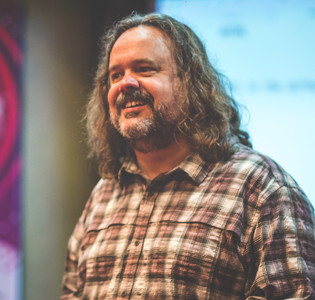
“Happy to meet everyone who came from near and far. Glad to know you've discovered some great lessons here, and glad you joined us for all the discoveries great and small.”
Web Architect & Principal Engineer, Scott Davis

“Wonderful set of conferences, well organized, fantastic speakers, and an amazingly interactive set of audience. Thanks for having me at the events!”
Founder of Agile Developer Inc., Dr. Venkat Subramaniam

“What a buzz! The events have been instrumental in bringing the whole software community together. There has been something for everyone from developers to architects to business to vendors. Thanks everyone!”
Voltaire Yap, Global Events Manager, Oracle Corp.
As teams move AI agents from pilot to production, a common challenge emerges. Agents can complete tasks in front of them, but they do not naturally carry learning across sessions. Without memory, corrections, preferences, and successful patterns are lost. Teams often compensate with longer prompts and repeated instructions, which increases complexity and reduces maintainability over time.
This session examines why memory is not an optional addition but a core component of production-grade agent systems. It starts with a fundamental question: if an agent is expected to improve over time, where does that learning reside? The talk explores how stateless models create friction in real-world systems and why prompting alone cannot support continuity, adaptation, and learning across sessions.
Using a document extraction use case, the session demonstrates how memory enables agents to retain useful context, adapt across runs, and improve over time. It walks through a practical loop of recall, act, evaluate, reflect, and store, showing how repeated cycles lead to more reliable outcomes. It also explains the different roles of memory types, helping teams decide what to retain, update, or discard.
What You Will Learn
Who Should Attend